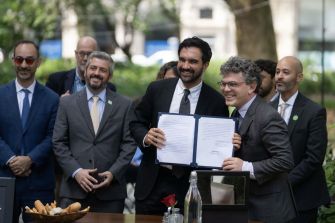
New York City Mayor Zohran Mamdani has signed a law bringing back year-round outdoor dining on city roadways, ending a requirement that restaurants remove their street dining setups during the winter.
Mamdani signed Int. 655-A on Aug. 31, allowing restaurants in the city’s Dining Out NYC program to operate roadway cafes throughout the year instead of dismantling them from Nov. 30 through March 31.
The measure, now Local Law 135 of 2026, took effect immediately. It creates separate licenses for seasonal and year-round roadway cafes and directs the New York City Department of Transportation to establish standards for winterization, snow removal, and year-round operation.
Restaurants with qualifying existing roadway cafes can apply for a one-year interim license to operate through the winter. The interim license costs $630 in addition to the existing roadway cafe license fee and can be renewed while the restaurant’s underlying approval remains in effect.
The change reverses one of the central restrictions in the permanent outdoor dining program adopted under former Mayor Eric Adams.
New York City dramatically expanded outdoor dining during the COVID-19 pandemic. A 2023 law later established Dining Out NYC as a permanent program but limited roadway cafes to April 1 through Nov. 29. Sidewalk cafes were already allowed to operate year-round.
That distinction meant restaurants using curb or parking-lane space had to dismantle and reinstall their setups each year.
Mamdani said the seasonal requirement increased costs for small businesses and made it harder for restaurants to plan. His administration has made restoring year-round roadway dining part of a broader effort to reduce regulatory barriers for small businesses.
The new law also permits restaurants to use removable winterization materials, including vertical coverings attached to overhead coverings, subject to DOT regulations.
Outdoor dining will remain subject to city oversight. Restaurants still need a license and revocable consent to use public roadway space, and DOT retains authority over the design, placement and operation of the cafes.
The legislation also sets an 11 p.m. closing limit for roadway and most sidewalk cafes. DOT cannot adopt regulations allowing those outdoor dining areas to operate later.
Public safety requirements remain in place, including rules governing street access, barriers and emergency travel lanes. The law also directs DOT to develop specific standards for snow removal and winter operations, while the Department of Sanitation may establish additional cleanliness and snow removal rules.
The City Council approved the legislation on Aug. 13. Council Member Lincoln Restler sponsored the measure, which passed as part of a broader package aimed at changing the city’s outdoor dining system and reducing costs for participating businesses.
At the time of the Council vote, 1,649 restaurants held fully issued outdoor dining licenses, according to the Council.
Other measures approved with the package address sanitation, winter coverings for sidewalk cafes and how restaurants can pay fees associated with using public street and sidewalk space.
One measure establishes cleanliness standards for outdoor cafes and allows civil penalties for trash, debris, graffiti, vermin, food scraps and other unsanitary conditions. Another allows certain annual payments for roadway and sidewalk cafe space to be made in quarterly installments rather than entirely upfront.
For restaurant owners, the most immediate change is that the annual winter shutdown of roadway dining is no longer automatic.
Existing operators that qualify for the interim process can seek permission to remain open through the coming winter, while future applicants will be able to choose between seasonal and year-round roadway cafe licenses.
DOT is expected to develop the additional winter operating standards as the city transitions to the new system.