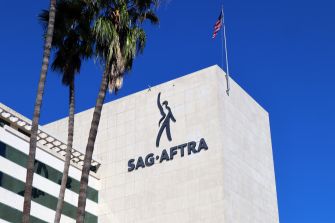
SAG-AFTRA received a $10 million federal pandemic loan that was later forgiven, according to government lending data, as the performers' union faces allegations over its handling of unclaimed residual payments, production security deposits, and a reported $48.25 million real estate acquisition.
The financial allegations, raised in recent reporting by journalist Desirée Townsend, include claims that SAG-AFTRA relies on unclaimed money owed to performers to cover operating expenses and has delayed returning deposits to film producers. Sources cited in the reporting also alleged the union could face bankruptcy if required to pay all outstanding residuals immediately.
Federal Paycheck Protection Program (PPP) records identify a $10 million loan approved for the Screen Actors Guild-American Federation of Television and Radio Artists on April 6, 2021, through Citibank. The application listed 397 jobs, with nearly the entire loan amount allocated to payroll. Approximately $10.1 million, including accrued interest, was forgiven on March 29, 2022.
Congress expanded PPP eligibility to additional nonprofit organizations in March 2021, including certain tax-exempt organizations that met restrictions involving employee counts and lobbying activities. The rules permitted eligible borrowers to obtain forgiveness for funds spent on payroll and other authorized expenses.
The loan record identifies SAG-AFTRA as a nonprofit membership organization under Section 501(c)(6) of the Internal Revenue Code. The union's precise eligibility under the rules applicable to its application depends on its organizational classification, employment structure, and other requirements in effect when it applied.
The separately incorporated SAG-AFTRA Foundation also received a PPP loan of $563,100 in April 2020, according to its audited financial statements. That loan was forgiven in July 2021.
Townsend said she requested SAG-AFTRA's original $10 million loan application and supporting documents from the Small Business Administration under the Freedom of Information Act. The records could provide further details about the union's eligibility certifications and the financial information used to obtain the loan.
SAG-AFTRA's treatment of unclaimed residual payments is governed by its constitution, which permits certain funds to be declared forfeited after three years when eligible performers or beneficiaries cannot be located or fail to claim their money. Recipients retain the right to recover those payments by submitting a written claim, even after the funds have been transferred for other permitted uses.
A May 2017 financial review conducted by accounting firm Bond Beebe confirmed that SAG-AFTRA had previously transferred a portion of unclaimed residuals into its general treasury to cover administrative expenses. The accountants found that the union had exercised that authority once since its 2012 formation and had informed its national board.
The review was commissioned through the union's legal counsel following earlier allegations of financial misconduct. Bond Beebe concluded that the financial safeguards and transactions it examined complied with established policies, rejecting the allegations reviewed at the time.
Residuals are additional payments earned by performers when films and television programs are distributed beyond their original release. SAG-AFTRA processes payments received from producers and maintains a public database for actors and beneficiaries whose funds remain unclaimed.
The latest allegations also involve money deposited by producers before filming. Townsend reported on October 24 that some productions had waited months, and in certain cases more than a year, for SAG-AFTRA to return their security deposits.
Among the productions identified was The Sunshine Project, a New Mexico film involving actor James Franco. According to the reporting, the production claimed that its performers had been paid more than a year earlier, but its security deposit remained outstanding.
Under SAG-AFTRA's published requirements, producers may be required to deposit between 40% and 100% of performer salaries and related pension and health contributions. The union holds the money to protect performers against unpaid contractual obligations.
Deposits are returned after producers satisfy applicable conditions, including payment of performers, resolution of outstanding claims, payment of benefit contributions and delivery of required financial assurances. Whether the conditions were met in the disputed production remains to be established.
Federal labor disclosure figures also show that SAG-AFTRA National Executive Director Duncan Crabtree-Ireland received $1,120,502 in total reported compensation for 2025. The figure included $1,068,535 in gross salary, $8,000 in allowances and $43,967 in official business disbursements.
On October 24, SAG-AFTRA's national board voted 98.34% in favor of extending Crabtree-Ireland's contract through June 20, 2032, and adding chief executive officer to his title. The terms of the new agreement were not publicly disclosed.
Townsend has separately alleged that SAG-AFTRA purchased property for approximately $48.25 million in cash in 2023, questioning the transaction's valuation and financial terms. The union announced in 2022 that it had created a real estate investment subcommittee to explore property acquisitions in Los Angeles. Independent property records establishing the reported purchase price and payment method have yet to be obtained.
The SBA loan application and supporting forgiveness records remain among the documents sought as questions continue over SAG-AFTRA's financial practices and the treatment of money held on behalf of performers and producers.