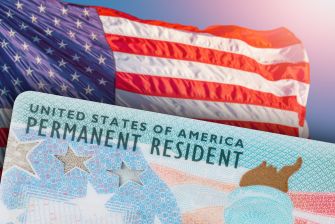
The Supreme Court has given immigration officials more authority over some green card holders reentering the United States while facing criminal charges, ruling that border officers do not need clear and convincing evidence of a qualifying crime when the resident arrives.
The 6-3 decision in Blanche v. Lau allows the government to establish that evidence later during removal proceedings. The ruling overturns a federal appeals court decision that imposed the higher proof requirement at the border.
Justice Clarence Thomas wrote the majority opinion, joined by Chief Justice John Roberts and Justices Samuel Alito, Neil Gorsuch, Brett Kavanaugh and Amy Coney Barrett. Justices Ketanji Brown Jackson, Sonia Sotomayor and Elena Kagan dissented.
The ruling reverses a federal appeals court that found the government needed clear and convincing evidence at the border before it could treat a returning permanent resident as seeking admission under one of the exceptions in federal immigration law.
Lau, a Chinese citizen, became a lawful permanent resident in 2007. New Jersey charged him with trademark counterfeiting in May 2012. While the criminal case was pending, he traveled to China and returned to John F. Kennedy International Airport the following month.
Green card holders returning from temporary trips abroad are generally treated as already admitted to the United States. Federal law creates several exceptions, including when a lawful permanent resident has committed certain crimes involving moral turpitude.
When Lau returned, a border officer relied on the pending counterfeiting charge and treated him as an applicant seeking admission. Officials paroled him into the country while the criminal case continued.
Lau later pleaded guilty to trademark counterfeiting. Federal immigration officials then began removal proceedings, arguing that the conviction made him inadmissible because he had committed a crime involving moral turpitude.
An immigration judge ordered Lau removed, and the Board of Immigration Appeals upheld the decision. The U.S. Court of Appeals for the Second Circuit later sided with Lau, finding that immigration officials needed clear and convincing evidence when he returned that he had already committed a qualifying offense.
The Supreme Court rejected that requirement.
Thomas wrote that the Immigration and Nationality Act does not impose the clear and convincing evidence standard on border officers making the initial decision about how to treat a returning permanent resident.
The majority said the government may establish the necessary facts later in removal proceedings. Lau's guilty plea supplied that evidence, according to the Court.
The justices also rejected Lau's argument that officials had to wait for a criminal conviction before treating him as seeking admission. The statute applies when a permanent resident "has committed" a covered offense, Thomas wrote, rather than only after a conviction has been entered.
The Court left one issue unresolved. It did not say how much evidence border officers need when making the initial determination. The justices held only that the clear and convincing evidence standard imposed by the Second Circuit does not apply at that stage.
The ruling affects lawful permanent residents who travel abroad while facing criminal allegations, because being treated as an applicant for admission can change the rules governing detention, parole, and later removal proceedings.
Jackson focused on those consequences in dissent. Joined by Sotomayor and Kagan, she argued that officials should have to establish that a statutory exception applies before changing how a returning permanent resident is treated at the border.
She also pointed to Lau's experience after officials confiscated his physical green card and issued temporary documentation while his immigration case remained unresolved.
The Supreme Court vacated the Second Circuit's judgment and sent the case back for further proceedings. The lower court must still consider whether Lau's trademark counterfeiting conviction qualifies as a crime involving moral turpitude under federal immigration law.