In its ruling in Department of Homeland Security v. Regents of the University of California in June, the U.S. Supreme Court rejected the Trump administration's bid to remove the protections shielding more than 650,000 undocumented immigrants from deportation.
The court determined in a 5-4 vote that the White House failed to provide adequate legal justifications for dismantling Deferred Action for Childhood Arrivals (DACA), an Obama-era program that created a legal status for immigrants brought to the country as children. The ruling does not address DACA's legality, nor does it question the administration's right to rescind the program. Instead, the court focused on procedural issues.
"The dispute before the court is not whether DHS may rescind DACA. All parties agree that it may," Chief Justice John G. Roberts Jr. wrote.
"We address only whether the complied with the procedural requirement that it provide a reasoned explanation for its action. Here the agency failed to consider the conspicuous issues… about the hardship to DACA recipients."
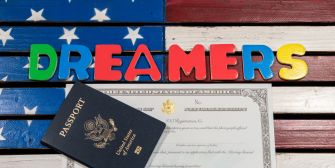
Since the law was enacted in 2012, an immigrant could apply for DACA if they are 30 and under and were brought to the U.S. illegally before they turned 16. Recipients of DACA protection, called "Dreamers," are eligible for legal work permits and are protected from deportation. They also acquire "lawful presence."
DACA's current situation is perilous. Dreamers are safe for now, but the protection is flimsy. In the Supreme Court's decision, Justice Roberts wrote that the Trump administration failed to consider the hardship involved in ending DACA. The government is allowed to take actions that adversely affect a group of people. However, it needs to provide robust justifications for doing so.
"Since 2012, DACA recipients have enrolled in degree programs, embarked on careers, started businesses, purchased homes, and even married and had children, all in reliance" on the DACA program," Roberts wrote.
"The consequences of the rescission, emphasize, would 'radiate outward' to DACA recipients' families, including their 200,000 U.S.-citizen children, to the schools where DACA recipients study and teach, and to the employers who have invested time and money in training them…"
In a dissenting opinion, Justice Clarence Thomas wrote that the DACA program was illegal to begin with, and "the Obama administration arrogated to itself power it was not given by Congress."
He added: "Thus, every action taken by DHS under DACA is the unlawful exercise of power. Now, under the Trump administration, DHS has provided the most compelling reason to rescind DACA… Today's decision must be recognized for what it is: an effort to avoid a politically controversial but legally correct decision. "
Now, the Trump administration has two choices. It can give up its fight and allow DACA to continue unmolested, or it can continue the battle armed with sharper legal reasoning. It is clear that President Trump plans to continue the legal fight. However, it is less clear what his stance is on the Dreamers' ultimate fate.
After last month's decision, he tweeted: "As President of the United States, I am asking for a legal solution on DACA, not a political one, consistent with the rule of law. The Supreme Court is not willing to give us one, so now we have to start this process all over again."
Since 2017, United States Citizenship and Immigration Services (USCIS), has only processed DACA renewals. First-time applicants cannot presently apply. In NAACP v. Trump, an earlier case out of the U.S. District Court for the District of Columbia, federal judge John D. Bates also demanded that the administration justify its attempt to revoke DACA privileges. If the administration had refused to do so, USCIS would have been forced to reinstate the program entirely. However, the government response was timely, and the court stayed its order. DACA was left in limbo.
Studies show strong public support for DACA, which may influence President Trump's decision. A June Pew Research survey found that nearly three-quarters of Americans support granting permanent legal status to Dreamers, with the majority of both Democrats and Republicans expressing approval.