Supreme Court Rejects Trump Bid to Revive Mail-In Ballot Rules After Second Judge Blocks Them
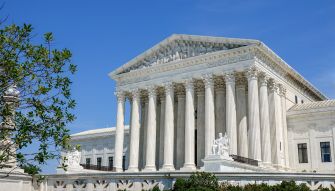
President Donald Trump’s push to impose new nationwide mail-in ballot rules before the 2026 midterms suffered two setbacks in less than 24 hours, with a second federal judge blocking the U.S. Postal Service plan Sunday and the Supreme Court rejecting the administration’s emergency bid to revive it Monday.
The Supreme Court refused to suspend an injunction issued by U.S. District Judge Indira Talwani in Massachusetts. The Court said the government was unlikely to succeed in challenging the preliminary injunction and had not shown that the remaining factors favored emergency relief.
The decision came less than a day after U.S. District Judge Carl Nichols in Washington separately blocked the same USPS rule. Nichols, a Trump appointee, found challengers were likely to show that the Postal Service exceeded the authority Congress gave the agency.
The rule would require election officials to provide USPS with information about voters receiving mail ballots, use approved ballot-envelope designs, and place unique barcodes on federal ballot mail before it is accepted for delivery.
USPS has broad authority over the collection, processing, and delivery of mail. Nichols found that power did not extend to requiring states to upload voter information into a federal system and making compliance with those requirements a condition of sending ballots.
The administration argues that USPS is regulating material moving through the postal system. States and voting-rights groups challenging the policy say the requirements cross into election administration, where states and Congress hold authority over federal elections.
Nichols also pointed to the compressed election calendar. Election offices have already designed materials and begun preparations under existing procedures, and he found that imposing the new requirements this close to the midterms could disrupt operations and put ballots at risk.
Questions about whether the system could operate reliably before November had surfaced before the court rulings.
A USPS whistleblower warned that the new mail-voting system could delay thousands of ballots, alleging that the technology was rushed and insufficiently tested. The disclosure claimed that a verification problem involving one ballot could cause an entire shipment to be returned. The USPS Office of Inspector General has since opened a review of the allegations.
Talwani issued the first preliminary injunction on September 4. The First U.S. Circuit Court of Appeals kept the mail-ballot rules blocked on September 10, prompting the administration to seek emergency relief from the Supreme Court.
Justice Brett Kavanaugh agreed Monday that the rule should remain off the table for the 2026 elections, but his concurrence took a narrower path.
Kavanaugh wrote that USPS may ultimately have statutory authority to adopt the policy. He focused instead on timing, finding that applying the requirements this year would likely violate federal administrative law because state and local election officials have too little time to reasonably implement them before voting.
His reasoning leaves open the possibility that a similar rule adopted earlier in an election cycle could face a different legal outcome. States and voting groups could still challenge USPS’s underlying authority.
Justices Samuel Alito and Clarence Thomas dissented. Alito argued that the government had met the requirements for a stay and questioned the challengers’ standing and legal claims.
The dispute stems from a March executive order directing USPS to develop new requirements for federal ballot mail as part of Trump’s broader effort to tighten mail-voting procedures.
The case has already reached the Supreme Court once. On August 24, the justices lifted an earlier block on Trump’s mail-in ballot order, finding that the challenge at that stage came before USPS issued its final rule.
USPS later finalized the requirements, allowing states and voting-rights groups to bring new challenges aimed directly at the policy.
Monday’s Supreme Court action leaves states operating under existing mail-ballot procedures for the November 3 midterms while the lower courts continue weighing whether USPS can impose the disputed requirements in future elections.