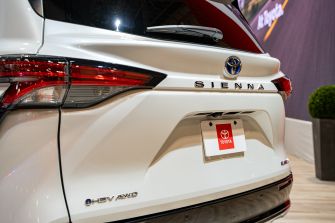
Toyota must face a proposed class action after allegedly leaving families waiting months to repair defective seats in nearly 55,000 Sienna minivans, a California federal judge ruled on October 15, 2026. The lawsuit accuses the automaker of failing to provide timely repairs for a safety defect that could increase the risk of passenger injuries in a crash, leaving owners paying for vehicles they could no longer use at full seating capacity.
U.S. District Judge Hernán D. Vera largely rejected Toyota's attempt to dismiss the case, finding that five consumers had sufficiently alleged the company's repair warranty failed to provide an effective remedy. The decision allows their central warranty claims to proceed over defects involving second-row seat rails in certain 2025 Toyota Sienna Hybrid minivans.
The controversy began in October 2025, when Toyota recalled 54,631 Siennas after discovering improperly welded seat rails. According to the National Highway Traffic Safety Administration (NHTSA), the defect could compromise the structural integrity of second-row seats during certain high-speed collisions, increasing the risk of injuries to passengers.
Toyota warned owners to avoid using the affected seats or installing child restraints in them until repairs were completed. Although the company initially anticipated replacement parts would become available in December 2025, customers allege they waited months for a solution, leaving families with fewer usable seats than their vehicles were designed to provide.
By April 1, 2026, when the lawsuit was filed in the U.S. District Court for the Central District of California, Toyota allegedly had yet to repair a single affected vehicle. The five plaintiffs, led by Adam Hamblin, say they continued making payments on minivans whose passenger capacity had been substantially reduced by the recall.
Temporary replacement vehicles also became a point of contention. Toyota offered loaner cars while owners awaited repairs, but the plaintiffs allege those vehicles lacked the seating capacity or features of their Siennas. Some customers were also required to leave their minivans at dealerships during the repair process, adding to the transportation difficulties described in the lawsuit.
Toyota defended its response, arguing that the affected welds complied with federal safety standards despite falling short of its internal engineering requirements. The automaker also pointed to its voluntary recall, free replacement program and availability of loaner vehicles as evidence that it had taken appropriate steps to address the defect.
Vera found that those measures left a key question unresolved: whether Toyota provided repairs within a reasonable time. The judge cited allegations that the company took more than five months to begin fixing affected vehicles, allowing the owners to pursue claims that the delays defeated the purpose of Toyota's warranty.
Under warranty law, a manufacturer's promise to repair or replace defective parts can fail its essential purpose when the promised remedy takes an unreasonable amount of time. That can allow customers to seek additional relief beyond the warranty's limited repair provisions, depending on the applicable law and circumstances.
The judge also narrowed the lawsuit, dismissing an unjust enrichment claim because the dispute involved obligations covered by an express warranty. One Ohio plaintiff received permission to amend a separate warranty allegation.
The litigation comes as Toyota continues addressing the recalled vehicles. A July 2026 recall progress figure cited in reporting indicated that 10,386 of the 54,631 affected minivans had received repairs, although that figure requires confirmation against federal recall records. The plaintiffs' allegations concern the delays they experienced after Toyota announced the recall and before replacement parts became available.
The five consumers are seeking to represent a broader group of owners and lessees of affected Sienna minivans. Their proposed class must still receive court certification, while Toyota's liability remains to be determined as Hamblin et al. v. Toyota Motor Sales, U.S.A., Inc. et al. proceeds in federal court.