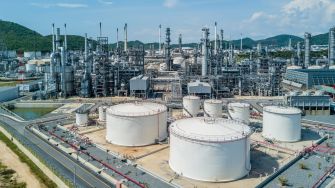
President Donald Trump has invoked a Cold War-era defense law to direct up to $150 million toward U.S. oil refineries as gasoline prices climb above $4 a gallon and diesel exceeds $6. The October 22 action allows the federal government to support refinery expansion and petroleum infrastructure projects under powers intended to protect national defense.
The administration's plan draws on a broader $1 billion congressional allocation for energy projects considered critical to national security. The Department of Energy expects the investments to add millions of gallons of gasoline, diesel and jet fuel to daily domestic production, although funding recipients and project timelines have yet to be announced.
Trump signed a presidential memorandum directing Defense Secretary Pete Hegseth to use Section 303 of the Defense Production Act of 1950 to strengthen domestic petroleum production, refining, pipelines and fuel storage facilities. The order identifies those operations as essential to national defense and authorizes federal purchases, financial commitments and agreements to expand industrial capacity.
The directive comes as global energy disruptions linked to the conflict involving Iran and attacks on Russian energy infrastructure continue to pressure fuel markets. As of October 23, the national average price of gasoline stood at approximately $4.29 per gallon, while diesel averaged $6.32, increasing transportation and operating costs for consumers and businesses.
Trump determined that financing constraints, construction timelines, permitting delays and supply chain limitations have prevented private industry from expanding petroleum infrastructure quickly enough to meet national defense needs. Trump cited the risk of a petroleum shortfall that could severely impair national defense capabilities.
The president also waived six statutory requirements governing federal support for industrial expansion, citing the national energy emergency he declared in January 2025. Section 303 of the Defense Production Act allows the government to support industries essential to national defense through purchases, financial commitments and investments in production capacity. Enacted during the Korean War, the statute permits specified requirements to be waived during a declared national emergency or when an industrial shortage threatens defense capabilities.
Trump previously invoked the same provision on April 20, designating domestic petroleum production, refining and distribution as essential to national defense. That determination assigned implementation to the energy secretary, while the October 22 memorandum directs Hegseth to carry out the authority.
The Energy Department's latest funding initiative would support efforts to restore and expand American refineries. Energy Secretary Chris Wright said the funding would help restart and expand U.S. refining operations.
Federal funding could accelerate expansions at existing refineries, although industry specialists expect substantial increases in fuel production to take months. Equipment purchases, construction and regulatory approvals remain among the obstacles facing operators.
Any relief at the pump could take longer. Gasoline and diesel prices remain tied to global crude oil costs and supply disruptions, limiting how quickly expanded U.S. refining operations could affect what consumers pay.
The Energy Department has yet to identify funding recipients or establish a timeline for the refinery expansions. Project selections will be the next step in determining how quickly the administration's $150 million initiative translates into additional fuel production.