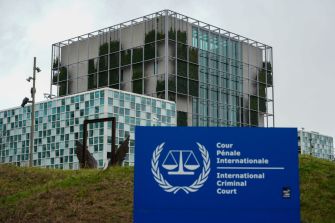
The Trump administration imposed sweeping sanctions on the International Criminal Court (ICC) on October 9, 2026, targeting the entire institution just hours after one of its former judges won the Nobel Peace Prize. The move threatens the world's permanent war crimes tribunal with restrictions on U.S. financial services, technology, and dollar-based transactions, extending Washington's sanctions campaign from individual judges and prosecutors to the court itself.
Secretary of State Marco Rubio delivered an ultimatum as the Treasury Department placed the Hague-based court on its list of sanctioned entities. "Either the ICC will end its threats, or we will end the ICC," Rubio declared in a video statement, accusing the tribunal of pursuing investigations that threaten U.S. sovereignty and the interests of American allies.
The sanctions came shortly after the Norwegian Nobel Committee awarded the 2026 Nobel Peace Prize to Navanethem "Navi" Pillay, an 85-year-old South African jurist and former ICC judge, for her work advancing international law and accountability for atrocities. U.S. officials said the timing was coincidental and that the measures had been planned for months.
Under Executive Order 14203, signed by President Donald Trump in February 2025, ICC property and financial interests subject to U.S. jurisdiction are generally frozen, while American individuals and businesses are barred from prohibited transactions without federal authorization. International banks and service providers with ties to the U.S. financial system could also face compliance risks, potentially disrupting the court's ability to pay employees, maintain technology systems, and pursue investigations.
The Treasury Department issued four general licenses permitting certain activities to continue, including transactions involving telecommunications, enterprise software, pensions and detainees. General License 13 authorizes payments needed to maintain or wind down the court's operations, including employee salaries, health insurance, rent, routine services and contributions from member states, through April 7, 2027. The sanctions designation itself took effect on October 9.
The ICC condemned the sanctions in an October 9 statement, calling them an unprecedented attempt to obstruct an independent judicial institution established by treaty and supported by 125 member states. The tribunal said the measures threatened its ability to carry out investigations and prosecutions, while ICC President Tomoko Akane pledged that its judicial work would continue independently.
The decision drew opposition from European governments, Canada and Japan, which reaffirmed their support for the tribunal. The Netherlands, where the ICC is headquartered, has explored protective measures, including European legal mechanisms intended to counter foreign sanctions. Israeli Prime Minister Benjamin Netanyahu, whose government has challenged the court's authority, praised Washington's action.
The United States and Israel are outside the Rome Statute, the treaty establishing the ICC, and both dispute its authority over their nationals. The tribunal can exercise jurisdiction over qualifying crimes allegedly committed on the territory of member states, even when the accused comes from a country that has not joined the treaty.
Washington has long opposed ICC investigations into alleged war crimes by U.S. personnel in Afghanistan. The dispute intensified in November 2024 when the tribunal issued arrest warrants for Netanyahu and former Israeli Defense Minister Yoav Gallant over alleged war crimes and crimes against humanity connected to the conflict in Gaza. Israel rejects the allegations and challenges the court's jurisdiction.
Pillay previously served on the International Criminal Tribunal for Rwanda, where she participated in a landmark ruling recognizing that rape and sexual violence can constitute acts of genocide. She subsequently became an ICC judge and served as United Nations High Commissioner for Human Rights, building a career that the Nobel Committee recognized for its contributions to international criminal law.
More recently, she chaired a UN commission of inquiry that concluded Israel had committed genocide in Gaza. Israeli officials strongly rejected the finding and criticized the Nobel Committee's decision to honor her, accusing the jurist of bias. Pillay received news of the award while attending an international legal forum in Nuremberg, Germany, the site of the post-World War II trials that helped establish modern international criminal law.
On October 10, Pillay criticized the U.S. sanctions during a video appearance at an event hosted by the Nobel Peace Center in Oslo, calling the measures "unheard of" and "unacceptable." She expressed concern about the court's future and the hundreds of employees affected by the restrictions, condemning sanctions against judges for decisions made in the course of their judicial duties.
The ICC's member states now face pressure to sustain the tribunal's financial and technical operations as Washington expands its sanctions campaign. European governments are weighing protective measures while the court continues its investigations and prosecutions under the new restrictions.