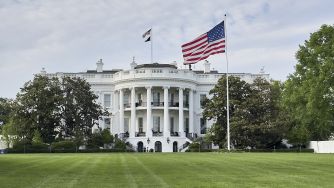
The White House has ordered federal agencies to obtain approval before employees agree to testify before Congress, giving President Donald Trump's legal and legislative affairs teams control over requests for testimony as Democrats prepare to investigate his administration after taking control of both chambers in January.
White House counsel Will Scharf issued the directive November 16, 2026, requiring executive departments and agencies to secure clearance from both the White House Office of Legislative Affairs and the Office of White House Counsel before any employee agrees to appear before a congressional committee.
The one-page memorandum, sent to agency general counsels, describes the requirement as an established White House consultation process. Scharf also announced that additional instructions governing other interactions with Congress would follow.
Democrats won majorities in the House and Senate in the November 3 midterm elections and have pledged investigations into Trump's administration, his family's business dealings, immigration enforcement, the Jeffrey Epstein investigation and other government activities. Their incoming committee chairs will have the authority to call witnesses, demand documents and issue subpoenas.
The directive follows a separate warning Scharf sent to Rep. Robert Garcia of California, who is expected to chair the House Oversight Committee when the new Congress convenes. In a November 9 letter, Scharf accused Democratic lawmakers of threatening investigations that could exceed their constitutional authority and warned that certain actions could amount to criminal misconduct.
Scharf cited Supreme Court decisions requiring congressional investigations to serve a legitimate legislative purpose rather than punish political opponents. He also warned that issuing unlawful subpoenas could warrant further investigation by the executive branch.
Garcia rejected the warning, asserting that Congress derives its investigative authority from Article I of the Constitution and operates independently of the White House. Democratic lawmakers have maintained that their planned investigations fall within Congress's responsibility to oversee federal agencies and government spending.
A White House official defended the administration's position, saying it would resist investigations considered politically motivated and baseless.
Federal law protects government employees' ability to provide information to Congress. Under 5 U.S.C. § 7211, federal employees have the right to communicate with lawmakers and congressional committees without interference or denial of that right.
The executive branch has asserted a competing authority to supervise employees' official communications. In a 2004 legal opinion, the Justice Department concluded that senior agency officials could restrict employees from providing certain information to Congress, relying on presidential authority to oversee the executive branch and protect privileged government communications.
That opinion arose from a dispute involving federal health officials and congressional requests for government cost estimates. The Justice Department rejected a broader interpretation of employee disclosure protections advanced by the Congressional Research Service, which had argued that agency officials generally could not prevent employees from supplying information to lawmakers.
Congress can compel testimony through subpoenas, although the executive branch may challenge those demands or assert executive privilege over certain information. Such disputes can lead to negotiations, contempt proceedings or federal court challenges.
Scharf's new memorandum requires approval before an employee agrees to testify but leaves the criteria for granting permission, response deadlines and procedures for handling congressional subpoenas unresolved. Agencies receiving testimony requests will now have to seek White House clearance before committing employees to appear.
The White House plans to issue further instructions on agency communications with Congress as incoming Democratic committee leaders prepare their first hearings and investigations. The approval requirement will face its first major test when lawmakers begin summoning Trump administration officials after the new Congress convenes in January 2027.