We use cookies and similar technologies to help our website function, understand how visitors use our site, and improve your experience. Some cookies are necessary for the website to operate, while others may be used for analytics or advertising.
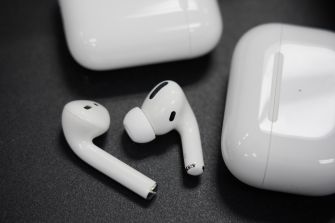
A Texas mother urged a federal appeals court Tuesday to revive her lawsuit against Apple over an Amber Alert that allegedly caused her son's permanent hearing loss, arguing that a judge wrongly excluded medical testimony linking the injury to his AirPods Pro.
During arguments on November 17, 2026, before the Ninth Circuit Court of Appeals in San Francisco, Ariani Reyes' attorney challenged the lower court's decision to dismiss the case after excluding an ear specialist's testimony. Apple defended the ruling, disputing the scientific evidence connecting the boy's hearing loss to the alert.
The lawsuit stems from a May 2020 incident involving Reyes' son, identified in court records as B.G., who was wearing first-generation AirPods Pro when an Amber Alert sounded through one earbud. His family alleges that the sudden, high-pitched notification damaged his inner ear, leaving him with permanent hearing loss in his right ear, tinnitus, and dizziness.
Reyes and the boy's father, Carlos Gordoa, sued Apple in May 2022, alleging negligence, defective product design, and failure to warn consumers about dangerous sound levels. The Civil ComplaintA complaint is the formal pleading that generally begins a civil lawsuit. It identifies the parties, states the legal and factual basis for the plaintiff’s claims, explains why the court has authority to hear the case, and asks the court for a specific form of relief.Read more → claimed the alert ruptured the boy's eardrum and damaged his cochlea, the part of the inner ear responsible for hearing. Gordoa died during the litigation.
U.S. District Judge Jacqueline Scott Corley ruled in Apple's favor in April 2025 after excluding testimony from Dr. Yoav Hahn, an ear specialist who attributed the boy's hearing loss to an acoustic shock that caused fluid leakage in the inner ear.
Corley found that Hahn lacked the qualifications and reliable scientific evidence needed to establish that the sound caused the alleged injury. Testing presented in the litigation measured the Amber Alert at a maximum of 113.5 decibels, below the levels the judge found were scientifically associated with hearing damage from brief exposure.
Medical examinations also showed that the boy's eardrum appeared normal shortly after the incident, conflicting with the family's original allegation that it had ruptured. Corley granted Apple summary judgment, ending the case before trial.
At Tuesday's hearing, Reyes' attorney, William Haacker, challenged the lower court's assessment of Hahn's qualifications and research. He cited medical literature involving call center workers who developed symptoms including tinnitus and dizziness after exposure to sounds below 120 decibels, arguing that the evidence supported Hahn's explanation for the boy's condition.
Apple's attorney, Neil Lloyd, countered that the doctor relied on insufficient scientific evidence and improperly dismissed other possible causes of the hearing loss. Lloyd pointed to a potential viral infection, including COVID-19, which Hahn had ruled out partly because the boy lacked symptoms commonly associated with the disease.
Circuit Judge Ryan Nelson questioned why similar injuries had not been reported more frequently if Amber Alerts played through earbuds were capable of causing such severe hearing damage. Haacker argued that the rarity of the incident was an issue for jurors to weigh rather than a reason to exclude the medical testimony.
Under Federal Rule of Evidence 702, judges must determine whether expert witnesses are qualified and whether their opinions are supported by reliable methods. Reyes argues that Hahn met those requirements and that his testimony should have been considered by a jury deciding the family's product liability claims.
The Ninth Circuit panel, which also included Judges Richard Paez and Daniel Collins, took the arguments under consideration. A reversal could allow Reyes to resume her lawsuit against Apple and seek a trial over the alleged AirPods defect.
Share This Article
If you found this article insightful, consider sharing it with your network.
Alexandra Agraz is a managing consultant, former Diplomatic Aide, and guest contributor to Law Commentary. She has firsthand experience facilitating high-level international events, including the signing of significant economic and political agreements between the United States and Mexico. Her consulting expertise spans business strategy, organizational development, and cross-border initiatives. Her academic background includes business management studies at the bachelor's level and dual associate degrees in Humanities, Social and Political Sciences, and Film. Combining experience in diplomacy, business, and storytelling, she brings a multidisciplinary perspective to international affairs, legal developments, and cultural issues.
Tylenol maker Kenvue and several major retailers are asking a federal appeals court to reconsider a decision that revived more than 500 lawsuits alleging that acetaminophen use during pregnancy contributed to autism or ADHD in children.In a filing Thursday, Kenvue and defendants including Walmart, CVS, Walgreens and Target urged the...
Read
More about Tylenol Maker Fights Ruling That Revived 500 Autism Lawsuits »
Jay-Z’s effort to revive his extortion and defamation lawsuit against attorney Tony Buzbee faced skepticism from a California appeals court Thursday, with a three-judge panel tentatively siding with the lower court decision that dismissed the case.The dispute stems from a since-withdrawn lawsuit filed by an anonymous woman who accused Jay-Z,...
Read
More about Jay-Z’s Bid to Revive Tony Buzbee Lawsuit Faces Skeptical California Appeals Court »
Apple has accused OpenAI of destroying potential evidence in its federal trade secrets case, telling a judge that a forensic review of a former Apple engineer’s MacBook found he used a confidential circuit schematic after joining the artificial intelligence company.The Aug. 31 filing adds new allegations against former Apple engineer...
Read
More about Apple Accuses OpenAI of Destroying Evidence in Trade Secrets Case »
Two Michigan residents are suing Apple after allegedly being stalked with AirTags hidden in their vehicles, claiming the company knew its tracking devices could be misused and failed to provide adequate safeguards. The lawsuit, filed August 10 in federal court in Michigan, accuses Apple of negligence, defective product design, invasion...
Read
More about Michigan Residents Sue Apple Over AirTag Stalking, Claim Safety Features Failed »