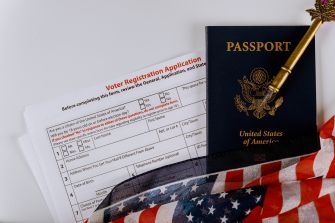
Arizona voters rejected a sweeping election overhaul Tuesday, November 3, 2026, while Kansas voters supported a constitutional amendment explicitly limiting voting eligibility to U.S. citizens, according to preliminary election results.
Arizona's Proposition 144 faced opposition from approximately 57% of voters in early returns. In Kansas, the citizenship amendment had received 54.31% support with 38% of precincts reporting.
The Arizona proposal would have required government-issued identification for all voting methods, including mail ballots, while adding new constitutional restrictions on campaign contributions and election administration. Kansas voters considered a narrower change to the wording of existing voter qualifications.
Both states already require U.S. citizenship to vote.
Under Proposition 144, Arizona voters would have been required to present government-issued identification in every election. Mail ballots, currently verified through signatures, would have become subject to an identification process that state lawmakers would establish after the amendment's approval.
Opponents warned that leaving those procedures to future legislation could disrupt Arizona's longstanding mail-in voting system. Supporters argued that the requirement would strengthen election security and establish uniform identification standards.
Republican lawmakers placed the proposal on the ballot under the name Fast, Accurate, Secure, Transparent Election Results Act, or FAST Election Results Act.
Beyond voter identification, Proposition 144 would have prohibited foreign nationals from contributing money or other resources to influence Arizona elections and required officials to offer voters the option of having their ballots counted at polling locations on Election Day.
Another provision would have allowed election laws to withstand legal challenges if they were rationally connected to a legitimate state interest, including election security, accurate results and efficient administration. The proposed changes would have applied to elections beginning January 1, 2028.
An August 18 ruling by the Arizona Supreme Court cleared Proposition 144 for the ballot after Randy Keating challenged its six constitutional changes, arguing that voters should have been allowed to consider them separately.
A majority of the justices concluded that the provisions were sufficiently connected because they addressed election administration and shared the objective of ensuring that eligible voters determined election outcomes.
Chief Justice Ann A. Scott Timmer and Justice Maria Elena Cruz dissented, raising objections to combining provisions concerning on-site ballot counting and legislative authority over election laws with the other proposed changes.
The decision allowed Arizona voters to consider the amendment as a single ballot question.
In Kansas, lawmakers submitted their constitutional amendment through House Concurrent Resolution 5004, proposing changes to Article 5, Section 1 of the state Constitution.
Existing language states that every U.S. citizen who is at least 18 years old and meets residency requirements qualifies as a voter. The amendment would replace that wording with an explicit declaration that no person qualifies unless those conditions are met, subject to specified residency exceptions.
Supporters described the proposal as a clarification of existing law. Kansas already restricts voting to U.S. citizens, and the amendment would make that requirement more explicit in the state Constitution.
Federal law prohibits noncitizens from voting in federal elections, while states establish eligibility rules for state and local contests within constitutional limits.
If the election-night results hold, Arizona will retain its existing voting procedures, including signature verification for mail ballots. Kansas will change its constitutional wording while preserving the citizenship, age, and residency qualifications already applied to voters.
Both states must complete vote counting and certification before the results become official.