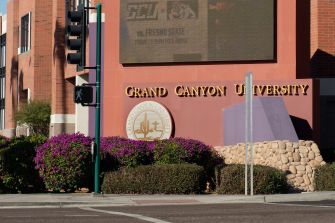
The Arizona Supreme Court has unanimously approved Grand Canyon University's new law school, allowing its graduates to take the state bar exam and pursue careers as licensed attorneys without attending a program accredited by the American Bar Association (ABA). The October 15, 2026, decision marks the first approval of its kind in Arizona and creates a new route into the legal profession.
The private Christian university plans to open its College of Law in Phoenix as early as fall 2027, becoming the state's third law school alongside Arizona State University and the University of Arizona. Students who complete the program can seek admission to the State Bar of Arizona after passing the bar examination and meeting character, fitness, and other licensing requirements.
Chief Justice Ann A. Scott Timmer cited the state's attorney shortage as a driving concern behind the expansion of legal education.
"Arizona faces a significant shortage of attorneys, and we are optimistic that GCU will provide an excellent legal education and help meet the need for more lawyers in communities throughout our state," Timmer said.
Arizona has one of the lowest attorney-to-population ratios in the country. A 2020 ABA study found approximately 2.1 active lawyers per 1,000 residents, compared with a national average of about four. The state has also introduced alternative licensing programs, including the Arizona Lawyers Apprentice Program in 2024, which allows certain applicants who narrowly miss a passing bar exam score to qualify through supervised legal work.
Grand Canyon's authorization removes a major hurdle facing newly established law schools. Under the traditional system, graduates generally need degrees from ABA-accredited institutions to qualify for admission, yet schools must operate with an initial class for at least one full year before beginning the national accreditation process.
The university intends to pursue ABA approval once eligible. Its students, however, could face restrictions if they want to practice outside Arizona. Many states still require degrees from ABA-accredited programs, potentially limiting where graduates can obtain licenses until the school secures that designation.
The justices also imposed oversight requirements. Three administrative orders adopted October 15 establish standards for non-ABA-accredited law schools, authorize Grand Canyon graduates to seek admission to the profession, and place the college under continued supervision by the court's Committee on Examinations and Administrative Office of the Courts.
Arizona has temporarily closed the new pathway to other applicants while it evaluates Grand Canyon's performance under those standards. Additional law schools seeking similar approval will have to await the court's assessment of the program.
The decision follows moves by other state supreme courts to reduce the ABA's authority over legal education. On January 6, 2026, the Texas Supreme Court adopted rules allowing the state to independently determine which law schools satisfy its admission requirements. Florida followed on January 15, expanding its accreditation rules to recognize additional federally approved accrediting agencies, subject to state court approval.
Grand Canyon plans to distinguish its program through a curriculum incorporating a Christian worldview, free-market principles, and an emphasis on individual liberties and the rule of law. James L. Williams, an Arizona attorney with 18 years of legal experience, has been appointed the college's inaugural dean.
The proposed school has already received authorization from the Arizona Board for Private Postsecondary Education. Its next step is obtaining approval from the Higher Learning Commission, the university's institutional accreditor, before moving ahead with plans to welcome its first class.