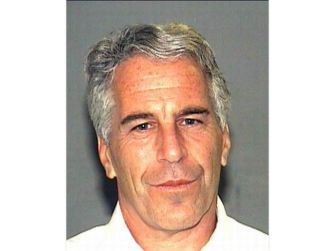
Bank of America will pay $72.5 million to women who accused the bank of helping facilitate Jeffrey Epstein’s sex trafficking operation after a federal judge approved a settlement in Manhattan.
U.S. District Judge Jed Rakoff entered final judgment Friday following an August 27 approval hearing. The agreement covers women who were sexually abused or trafficked by Epstein or people connected to his trafficking operation and resolves claims that Bank of America provided financial services that accusers alleged helped the network operate.
The deal is the third major bank settlement arising from Jeffrey Epstein trafficking claims. JPMorgan Chase agreed to pay $290 million to Epstein accusers in 2023, while Deutsche Bank reached a $75 million settlement in similar litigation. The three bank settlements now total $437.5 million.
The Bank of America lawsuit was filed in October 2025 by a woman identified as Jane Doe, who alleged that she met Epstein while living in Russia in 2011 and was sexually abused by him repeatedly through 2019. Her complaint claimed the bank opened an account for her in 2013 at the direction of Epstein associates and later handled transfers of money connected to him.
Doe also alleged that Bank of America provided services to Epstein associates and entities linked to his network, including the modeling agency MC2. The lawsuit claimed the bank continued handling accounts and transactions despite information that should have raised concerns about Epstein and his relationships with alleged victims.
Bank of America denied facilitating sex trafficking when it agreed to settle the lawsuit in March.
The agreement followed a key February ruling in which Rakoff allowed two claims under the federal Trafficking Victims Protection Act, or TVPA, to move forward. He dismissed claims accusing Bank of America of directly perpetrating trafficking, aiding and abetting Epstein, and negligence under New York law.
The TVPA criminalizes human trafficking and also allows survivors to seek damages in civil court. Its reach can extend beyond the person who committed the abuse to a business that knowingly benefited from participating in a trafficking venture when it knew or should have known trafficking was taking place.
For a bank, providing ordinary financial services to a customer who commits crimes does not automatically create trafficking liability. Rakoff said a claim against a financial institution requires allegations that its conduct went beyond routine banking and amounted to some level of active involvement.
Rakoff concluded that Doe had alleged enough for her claim to continue at the early stage of the lawsuit. Among other allegations, she claimed Bank of America provided her with preferential banking services, facilitated significant transfers involving Epstein, and offered nonroutine services while possessing information about his prior conviction and accusations of sexual misconduct.
A second surviving TVPA claim accused the bank of obstructing enforcement of federal trafficking laws. That type of claim requires allegations that a person or business knew authorities were trying to enforce the law and intentionally interfered with that effort.
The complaint alleged that Bank of America deliberately delayed filing suspicious activity reports involving certain Epstein-related transactions, including after the federal investigation that led to his 2019 arrest became public. Banks are required under federal anti-money laundering rules to report certain activity that may indicate financial crime or other suspicious conduct.
Those reporting rules do not generally give an individual an independent right to sue a bank simply because a suspicious activity report was not filed. Doe instead cited the alleged delays as evidence supporting her separate claim that Bank of America obstructed enforcement of the TVPA.
Rakoff’s February ruling did not establish that Bank of America participated in Epstein’s trafficking operation or obstructed investigators. At the motion to dismiss stage, a court generally decides whether the allegations are legally sufficient for a lawsuit to continue. The settlement ended the litigation before those allegations were resolved at trial.
At the final approval hearing, Rakoff rejected objections from three accusers who argued that the agreement released claims too broadly and required some class members to surrender related claims without adequate compensation.
The court also approved attorneys’ fees equal to 30% of the $72.5 million settlement fund. Under the final judgment, the covered claims against Bank of America have been dismissed with prejudice, preventing class members from bringing those claims again, and the court will retain authority over administration of the settlement.