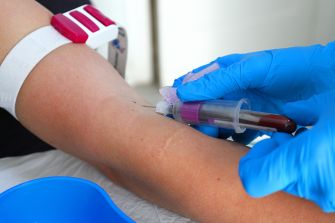
For patients, the appeal of a blood test that could look for dozens of cancers at once is easy to understand. Cancer screening today often means different tests for different diseases, and many cancers still have no routine screening test at all. A simple blood draw that could find a cancer signal before symptoms appear could change that experience dramatically — but only if patients and doctors understand what the test can find, what it can miss, and what happens after a positive result.
Tomorrow, September 23, 2026, a U.S. Food and Drug Administration advisory panel will consider GRAIL Inc.’s application for premarket approval of Galleri, a prescription blood test designed to detect signals associated with more than 50 types of cancer in adults 50 and older. The panel will vote on whether there is reasonable assurance that the test is safe and effective and whether its benefits outweigh its risks.
The meeting could become an important milestone for a new generation of cancer screening. Galleri is already available by prescription as a laboratory-developed test, but it has not been cleared or approved by the FDA. If approved, it would become the first FDA-approved multi-cancer early detection test and could influence broader clinical adoption and insurance coverage.
Galleri works differently from a mammogram, colonoscopy, or CT scan. The test analyzes fragments of cell-free DNA circulating in the blood and looks for methylation patterns, which are chemical changes to DNA associated with cancer. When it detects a cancer signal, the test also attempts to predict where in the body that signal originated so doctors can determine what diagnostic testing should come next.
A positive Galleri result is not a cancer diagnosis. It signals the need for further medical evaluation, which can include imaging, laboratory testing, endoscopy, or biopsy, depending on the suspected cancer site.
Understanding this is especially important for patients. Hearing that a blood test has detected a possible cancer signal canbe frightening, even when follow-up testing ultimately finds no cancer. On the other hand, a negative result can offer reassurance that the test itself cannot fully support. The FDA has made that limitation explicit. A “No Cancer Signal Detected” result does not rule out cancer, and the agency says patients should continue with established screening for cancers such as breast, colorectal, cervical and lung cancer when they are eligible. Galleri is intended to supplement those screening programs, not replace them.
The numbers behind the test help explain why.
In the PATHFINDER 2 study included in the FDA review, Galleri detected about 35% of cancers diagnosed in participants during the following 12 months. In the NHS-Galleri data reviewed by the FDA, sensitivity was 31.6%. In practical terms, the test identified roughly one out of every three cancers that were diagnosed during the one-year follow-up periods.
At the same time, Galleri produced relatively few positive results in people who did not have cancer. Specificity was 99.85% in PATHFINDER 2 and 99.74% in the NHS-Galleri analysis. The corresponding false-positive rates were 0.15% and 0.26%.
Among people who received a positive result, the probability that cancer was subsequently confirmed was 77% in PATHFINDER 2 and 66.2% in NHS-Galleri. When the test correctly detected cancer, its prediction of where the cancer signal originated was also accurate more than 90% of the time in both studies.
For patients and doctors, those numbers reveal both sides of the technology. A very low false-positive rate can limit unnecessary cancer workups, but sensitivity remains important because many cancers can still be present despite a negative Galleri result.
False positives carry their own consequences. The FDA noted that someone incorrectly identified as having a possible cancer signal can face additional imaging or invasive procedures as well as emotional distress. A false negative poses a different concern: a patient could mistakenly believe cancer has been ruled out and delay symptoms-based evaluation or established screening.
One of the most interesting questions facing the FDA panel is not simply whether Galleri detects cancer. It is whether the test should be described as an “early detection” test.
FDA reviewers specifically asked the panel to consider whether Galleri’s performance at different cancer stages supports using “early detection” in the proposed indication. If panel members believe the evidence does not support that description, the FDA has asked them to consider whether the test could instead be labeled more broadly for the detection of multiple cancers without using the word “early.”
The stage-by-stage results help explain the debate.
In the NHS-Galleri data reviewed by the FDA, the test detected 13.6% of stage I cancers and 34.4% of stage II cancers diagnosed during the 12-month period. Sensitivity increased to 44.3% for stage III disease and 60% for stage IV cancer.
Put simply, Galleri was more likely to detect cancers as they became more advanced in that analysis. That does not mean the test failed to find early cancers, as it did find them, but it makes the wording of an “early detection” claim more consequential.
For someone facing cancer, stage is much more than a number attached to a diagnosis. Earlier-stage disease often allows doctors to consider a wider range of treatments and, for many cancers, offers a better chance of treatment with curative intent. FDA data estimate that five-year relative survival across cancers diagnosed at a localized stage was 92% during 2015 through 2021, compared with 35% for cancers that had spread to distant sites. Outcomes vary widely by cancer type, but the broader reason for finding cancer earlier is clear.
That is also why multi-cancer screening has generated so much interest. Current screening recommendations cover only a limited group of cancers, while the FDA estimates that about 58% of the nearly 630,000 U.S. cancer deaths expected in 2026 will involve cancer types without a U.S. Preventive Services Task Force screening recommendation.
Pancreatic, ovarian, liver and several other potentially serious cancers do not have routine population-wide screening programs comparable to mammography for breast cancer or colonoscopy and stool testing for colorectal cancer. A reliable blood test capable of identifying signals from those cancers before symptoms send someone to a doctor could fill an important gap.
Galleri’s larger NHS trial also offers a more complicated picture of that promise.
The randomized study enrolled more than 142,000 adults and compared annual Galleri testing plus standard cancer screening with standard screening alone. After three rounds, the trial did not meet its primary endpoint of significantly reducing the combined number of stage III and stage IV diagnoses among 12 prespecified cancers.
Other findings were more encouraging. Participants offered Galleri had 16% more stage I and II cancers diagnosed, and the trial reported fewer stage IV cancers. Across the three screening rounds, stage IV diagnoses among the 12 prespecified cancers were 14% lower in the Galleri group, with larger reductions appearing during later screening rounds.
Those results capture why the FDA's decision is not a simple question of whether the technology “works.” Multi-cancer screening asks regulators to weigh several things at once: how frequently the test finds cancer, which cancers it finds, how early it finds them, how often it sends someone through an unnecessary diagnostic workup, and how patients may interpret a negative result.
For physicians, another question follows immediately: what do we do with the information?
A test that points toward the pancreas may lead to a very different diagnostic pathway than one suggesting the lung, breast or colon. Follow-up testing can involve specialists, imaging and sometimes invasive procedures. The benefit of finding cancer sooner must therefore be weighed alongside the physical, emotional and financial consequences of investigating signals that ultimately prove benign.
The FDA's Molecular and Clinical Genetics Panel will be asked to consider those tradeoffs when it votes September 23. The committee will separately address whether Galleri is sufficiently safe, whether there is reasonable assurance that it is effective, and whether its probable benefits outweigh its probable risks.
The panel's recommendation will not itself approve or reject Galleri. FDA advisory committees provide expert recommendations, but the agency makes the final regulatory decision and is not legally required to follow the panel's vote.
For patients, the prospect of screening for dozens of cancers with one blood draw is understandably exciting. It could eventually make cancer screening easier and reach diseases for which doctors currently have few good options for finding them before symptoms appear.
But a blood test that searches for many cancers is still a screening tool, not an all-clear signal and not a diagnosis. If Galleri moves closer to FDA approval, helping patients understand those differences will be every bit as important as making the test itself available.