A federal judge has struck down a Trump administration policy blocking immigrant visas for nationals of 75 countries, ruling that the State Department could not require otherwise eligible applicants to be denied based on nationality alone.
U.S. District Judge Jeannette A. Vargas of the Southern District of New York issued the ruling Friday in a challenge brought by immigration organizations, visa applicants and U.S. citizens seeking visas for relatives abroad. Vargas vacated the policy and visa refusals based solely on it, allowing those applications to be reviewed again.
The State Department announced the restrictions in January and put them into effect on January 21. They applied to immigrant visas for people seeking permanent residence through family, employment and other qualifying categories. Tourist, student and other temporary visas were outside the policy. The 75 countries included Brazil, Egypt, Haiti, Nigeria, Pakistan and Russia, among others.
The administration said the policy was aimed at applicants considered likely to become a “public charge,” an immigration term used when the government evaluates whether a person may become primarily dependent on public support. The State Department relied in part on data showing the use of public assistance among immigrant households from the countries covered by the restrictions.
Consular officers already can refuse visas on public charge grounds, but federal law requires them to assess each applicant individually. Factors can include age, health, finances, education, skills, and family circumstances.
Under the January policy, officers still conducted those individual reviews. Applicants from one of the listed countries nevertheless had to be refused even after an officer determined that they were not likely to become a public charge and otherwise qualified for a visa.
Vargas ruled that the policy conflicted with a federal law that generally bars discrimination in immigrant visa issuance based on race, sex, nationality, place of birth or residence. The judge concluded that the State Department had made nationality the deciding factor after the required individual review was complete.
Consular officers may continue refusing visas when an applicant meets the legal standard for public charge or another lawful basis for denial. Vargas found that the State Department went beyond those existing rules by adding nationality as a separate reason to reject applicants who otherwise met the visa requirements.
The ruling also addressed how authority is divided within the federal visa system. The Secretary of State oversees consular operations, but federal immigration law gives consular officers responsibility for deciding whether individual applicants qualify for visas.
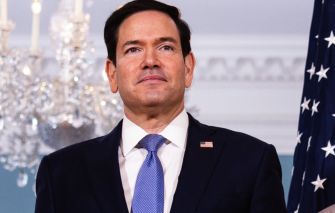
Vargas found that Secretary of State Marco Rubio exceeded his authority by directing those officers to deny visas after they had found applicants otherwise eligible. That finding also allowed the judge to set aside the policy under the Administrative Procedure Act, which permits courts to invalidate federal agency actions that conflict with the law or exceed an agency’s authority.
The administration pointed to the Supreme Court’s 2018 ruling in Trump v. Hawaii, which upheld restrictions on entry into the United States for nationals of several countries during Trump’s first term. Vargas found that precedent addressed the president’s authority to restrict entry, while the January policy governed the issuance of immigrant visas, where Congress has imposed separate limits on nationality discrimination.
Visa applications refused solely because of the 75-country policy will return to the State Department for another review. Applicants must still satisfy the other legal requirements for an immigrant visa, and consular officers may deny an application when another lawful reason applies. Refusals supported by a separate legal ground remain in place.
Vargas granted partial summary judgment on different claims to both sides, leaving parts of the lawsuit unresolved. The court gave the parties until September 11 to propose how the remaining claims should proceed.