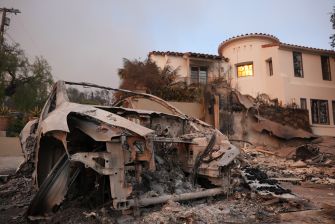
A federal jury in Los Angeles found Jonathan Rinderknecht guilty Friday, November 20, 2026, of starting the blaze that became the deadly Palisades Fire, which killed 12 people and destroyed more than 6,800 structures in January 2025. The verdict came nearly five months after his first trial ended with jurors deadlocked 10-2 in favor of acquittal.
Rinderknecht, 30, was convicted of two federal arson-related charges: destruction of government property by means of fire and arson affecting property used in interstate commerce. He faces up to 40 years in federal prison, with sentencing scheduled for March 17, 2027.
Prosecutors said Rinderknecht deliberately ignited a small brush fire known as the Lachman Fire shortly after midnight on January 1, 2025, near a hiking trail overlooking Pacific Palisades. Firefighters brought the blaze under control, but burning material remained deep in underground roots and vegetation. Six days later, powerful Santa Ana winds helped reignite the fire, sending flames through Pacific Palisades and Malibu on January 7.
After the first trial ended in a mistrial in June, federal prosecutors revised their indictment, dropping a charge involving timber set on fire and narrowing the government property charge to the original Lachman Fire. They retained a separate arson charge tied to the destruction caused by the larger wildfire.
At the retrial, which began November 4 before U.S. District Judge Anne Hwang, prosecutors relied heavily on cellphone records, surveillance footage and fire investigation findings to connect Rinderknecht to the ignition site.
Location data placed him near the hillside around the time the flames first appeared, while surveillance images showed his vehicle parked near a trail leading to the area. Fire detection cameras recorded the developing blaze, and prosecutors argued that surveillance evidence showed no other vehicles or pedestrians approaching the location before the fire began.
Jurors also heard testimony from Uber passengers Rinderknecht had driven earlier that evening and reviewed messages exchanged with his girlfriend. Prosecutors described him as angry and frustrated in the hours preceding the fire and pointed to a barbecue lighter recovered from his vehicle as a possible ignition source.
After the blaze began, Rinderknecht repeatedly attempted to call 911 and recorded footage of the flames on his cellphone. During that period, he asked ChatGPT whether someone could be held responsible for a fire accidentally started by a cigarette. Prosecutors also introduced earlier AI-generated images involving fire, arguing that the digital evidence, his behavior and statements to investigators helped establish his intent.
Fire investigators linked the January 1 blaze to the January 7 disaster through evidence that burning roots and vegetation had retained heat underground for several days. Their testimony supported the government's position that the initial fire survived until strong winds drove it into surrounding neighborhoods.
Defense attorney Steve Haney challenged the investigation, arguing that prosecutors relied on circumstantial evidence rather than eyewitness testimony or footage directly showing Rinderknecht starting the fire. Reports of fireworks, explosions and flashes during New Year's celebrations offered another possible explanation for the ignition, he told jurors.
Haney also cited 67 lighter tests that he said failed to produce the sustained fire spread described by investigators. The defense questioned the identified ignition point and pointed to missing Verizon cellphone records that might have established whether other people were near the hillside that night.
Questions about the Los Angeles Fire Department's response to the initial blaze also arose during the proceedings. Judge Hwang instructed jurors to exclude the adequacy of firefighting efforts from their determination of Rinderknecht's guilt.
The department's handling of the disaster has faced separate legal scrutiny. Among the lawsuits filed after the wildfire, homeowners Heidi Montag and Spencer Pratt sued Los Angeles officials, alleging negligence contributed to the destruction of their Pacific Palisades home.
Following roughly two weeks of testimony and nearly three days of deliberations, the second jury convicted Rinderknecht on both counts. His attorney said the defense was disappointed in the verdict but respected the jury process and plans to examine possible grounds for appeal.
Rinderknecht has remained in federal custody since his October 2025 arrest. U.S. District Judge Anne Hwang is scheduled to sentence him on March 17, 2027.