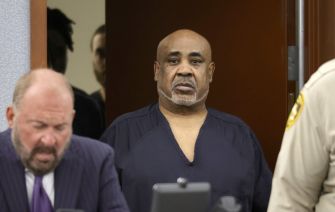
Duane “Keffe D” Davis plans to appeal his conviction for the 1996 murder of Tupac Shakur after jurors returned a guilty verdict in less than three hours, with his attorney expected to challenge pretrial rulings that allowed prosecutors to use statements Davis made in 2008.
Defense attorney Michael Sanft told NBC News that potential grounds for appeal had emerged before jury selection, particularly over the decision to admit statements Davis made during a 2008 proffer interview. Sanft also questioned how quickly jurors reached Monday’s verdict, saying the defense had expected deliberations to continue into the following day.
Davis was convicted of first-degree murder with use of a deadly weapon in connection with Shakur’s fatal shooting near the Las Vegas Strip. He is scheduled to be sentenced Oct. 13 and faces the possibility of spending the rest of his life in prison.
A proffer agreement sets conditions for how statements made during cooperation discussions may be used, with the scope of those protections depending on the terms of the agreement. Davis’ defense argued before trial that his 2008 statements were protected and should have been excluded from the evidence presented to jurors.
Prosecutors relied heavily on Davis’ own accounts of the shooting, including the 2008 interview and statements in his 2019 memoir, “Compton Street Legend.”
Davis had described being inside the white Cadillac involved in the drive-by shooting and obtaining the gun used in the attack. Prosecutors argued those statements helped establish that he orchestrated the shooting after Shakur and members of his entourage attacked Davis’ nephew, Orlando Anderson, at the MGM Grand earlier that night.
The defense maintained that Davis exaggerated or fabricated parts of those accounts to build his reputation and sell his story. Sanft argued that prosecutors lacked physical evidence corroborating key portions of Davis’ statements about his role in the killing.
An appellate court would review the legal issues raised by the defense, including whether the trial judge properly admitted the disputed statements and whether any error affected the conviction.
Shakur, 25, was shot on Sept. 7, 1996, while riding in a car driven by Death Row Records co-founder Marion “Suge” Knight. He died six days later.
Davis was not accused of firing the shots himself. Prosecutors argued that he supplied the gun and helped arrange the retaliatory attack, making him criminally responsible for Shakur’s death under Nevada law.
Sanft said his immediate focus is sentencing, where the defense is expected to seek the lowest sentence available.
Shakur’s family welcomed the conviction, saying in a statement Tuesday that they were grateful to jurors for considering the evidence and relieved by the verdict nearly 30 years after the rapper’s death.
Davis’ appeal has not yet been filed. Under Nevada appellate rules, a criminal defendant generally has 30 days after entry of the judgment to file a notice of appeal. Davis is scheduled to return to court for sentencing on Oct. 13.