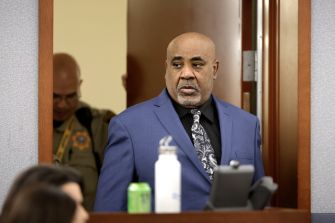
Duane “Keffe D” Davis is maintaining his innocence days after being convicted of first-degree murder in the 1996 killing of Tupac Shakur, challenging the memoir, interviews, and other statements prosecutors used to help secure the guilty verdict.
Davis told The Hollywood Reporter that he had nothing to do with Shakur’s death and accused law enforcement witnesses and prosecutors of presenting a false account of his role in the killing. His comments come ahead of an Oct. 13 sentencing and as his attorneys prepare to appeal the conviction.
A Las Vegas jury found Davis guilty of first-degree murder with use of a deadly weapon after less than three hours of deliberations. Prosecutors did not accuse him of firing the shots that killed Shakur. They argued that Davis supplied the gun and helped orchestrate the retaliatory attack after Shakur and members of his entourage assaulted Davis’ nephew, Orlando Anderson, at the MGM Grand earlier that night.
Davis has now taken direct aim at some of the evidence prosecutors used to establish that role.
He disputed the significance of his 2019 memoir, “Compton Street Legend,” which included accounts tying him to the shooting. Davis said he did not write the book and described his involvement as providing an author with stories and photographs.
“I never wrote that book,” Davis said, adding that he never reviewed or read it and pointing to the misspelling of his name on the cover.
Prosecutors also pointed to years of interviews and public statements in which Davis described his knowledge of the shooting and his presence in the Cadillac involved in the attack.
His defense argued at trial that those accounts were exaggerated or fabricated to generate publicity and money.
Davis offered a similar explanation for a VladTV interview played during the trial, saying he participated because he was broke and wanted to make money. He also said he believed he remained protected by an earlier agreement with federal authorities when he began discussing the Shakur case publicly.
“I was just there making the money,” Davis said.
The scope of those federal protections is expected to become one of the issues in Davis’ appeal. His attorneys previously challenged the use of statements he made during a 2008 proffer interview with investigators, arguing that protections attached to his cooperation should have prevented the statements from being used against him.
A proffer agreement can restrict how prosecutors use statements made during cooperation discussions, depending on the terms of the agreement and how the statements are later introduced.
His attorney, Michael Sanft, has already confirmed plans to appeal and has questioned evidentiary rulings made before trial as well as the speed of the jury’s verdict.
On appeal, Davis’ attorneys will have to show that a legal error affected the proceedings strongly enough to justify overturning the conviction or ordering a new trial.
Davis also explained why he did not testify in his own defense. He said his attorney advised him that taking the stand could hurt his chances on appeal.
During the interview, Davis accused police officers, federal agents, and prosecutors who participated in the case of lying about him and rejected the prosecution’s portrayal of him as a participant in Shakur’s murder.
“I’m innocent, man,” Davis said. “They got an innocent man sitting in jail.”
He also criticized the presence of Shakur’s relatives during the trial. Family members were in the courtroom when the verdict was announced and later welcomed the conviction, which came nearly 30 years after Shakur was fatally shot.
Davis said he believed members of the family were hostile toward him and complained about prosecutors bringing relatives into an area near where jurors could see them. He described the circumstances as biased against him.
When asked whether he had a message for Shakur’s family, Davis declined.
Shakur was shot on Sept. 7, 1996, while riding in a BMW driven by Death Row Records co-founder Marion “Suge” Knight near the Las Vegas Strip. He died six days later at age 25.
Davis was the only person charged in Shakur’s killing. Prosecutors relied heavily on statements he made over the years about being inside the Cadillac involved in the shooting and obtaining the gun used in the attack. His defense argued those accounts were unreliable and exaggerated for money and publicity.
His attorneys are expected to challenge the conviction on appeal. Davis is scheduled to be sentenced Oct. 13.