We use cookies and similar technologies to help our website function, understand how visitors use our site, and improve your experience. Some cookies are necessary for the website to operate, while others may be used for analytics or advertising.
LeBron James has sued the company behind an artificial intelligence-powered sports-betting app called “Bron,” accusing it of using his nickname, likeness, voice, and other identifying features without permission to make consumers believe he endorsed the service.
James and LBJ Trademarks LLC filed the lawsuit Tuesday, November 17, 2026, in the U.S. District Court for the Southern District of New York against PlayVision Inc. and co-founders Anish Gupta and Marc Zoghby. The 44-page complaint alleges seven federal and state claims and asks a judge to stop the company from using the Bron name or James’ identity, surrender profits tied to the campaign, and pay compensatory and punitive damages.
The dispute centers on both the app’s name and an AI-generated advertisement released this month.
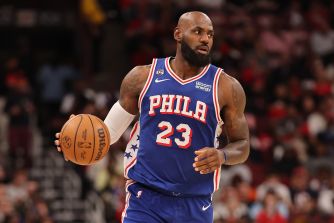
According to the complaint, PlayVision deliberately selected “Bron,” one of James’ best-known nicknames, for its sports-betting research app. The company then promoted the product with an AI-generated basketball player that James says was designed to evoke him through its body type, complexion, hair, tattoos, voice, No. 23 jersey, and the word “Bron” displayed across the player’s back.
The video shows the synthetic player sitting in an NBA-style locker room and scrolling through wagers involving professional basketball players. One sequence referenced Phoenix Suns forward Dillon Brooks and the prediction-market platform Kalshi, while other portions of the promotion displayed betting results and encouraged viewers to use the app.
James says he never authorized the advertisement and has no affiliation with PlayVision or the Bron app.
The company describes Bron as a sports-betting analytics and research service rather than a sportsbook that directly accepts wagers. The app aggregates betting information and odds from sportsbooks and prediction markets, offers bet-tracking services and sells paid subscriptions. PlayVision has marketed the service as both the “ChatGPT for Sports Betting” and the “TikTok for Sports Betting,” according to the complaint.
James’ lawyers sent PlayVision a cease-and-desist letter on November 5. The company removed the disputed advertisement from its own social media accounts, but the lawsuit alleges the video had already been reposted and viewed approximately one million times within about a day.
Gupta responded that the company was removing the materials and was in the process of changing the app’s name. The complaint alleges that PlayVision continued operating under the Bron name when the lawsuit was filed and used the controversy surrounding the cease-and-desist demand in subsequent promotional activity.
PlayVision had not publicly filed a response to the lawsuit as of Wednesday morning. Gupta previously said the company planned to announce a new name for the app on November 18.
The complaint’s central federal claim is based on the Lanham Act, the federal law commonly associated with trademarks and misleading commercial branding.
James argues that using “Bron” as the name of a basketball-related betting product, combined with an AI-generated figure bearing numerous features associated with him, falsely suggested that he sponsored, approved, or was affiliated with the app. LBJ Trademarks also claims common-law trademark rights in “Bron” and related identifiers based on James’ decades of public and commercial use of the nickname.
False endorsement claims do not require a company to expressly state that a celebrity approved a product. The legal issue can turn on whether the overall presentation is likely to cause consumers to believe an endorsement or association exists.
The AI advertisement makes that part of James’ case unusually direct. Rather than relying on the Bron name alone, the complaint alleges that PlayVision combined the nickname with his jersey number, tattoos, physical appearance, and synthesized voice while depicting the character using the company’s product.
James also brought claims under New York Civil Rights Law §§ 50 and 51, which restrict the use of a living person’s name, portrait, picture, likeness, or voice for advertising or trade without written consent. Section 51 permits an affected person to seek an injunction and damages and allows exemplary damages when the unauthorized use is knowing.
Those provisions form the basis of what is commonly described as New York’s statutory right of publicity for living people.
The betting context adds another layer to James’ allegations. His lawyers argue that portraying an AI version of an active NBA player reviewing wagers on NBA players is more damaging than an ordinary unauthorized celebrity endorsement because NBA rules prohibit players from betting on league games.
James also has an existing exclusive endorsement relationship with prediction-market company Polymarket. The complaint alleges that the Bron advertisement referenced Kalshi, a competing prediction-market platform, creating the additional impression that James uses or endorses a rival service.
According to the complaint, James has historically structured gambling-related endorsement agreements to avoid suggesting that he wagers on NBA games. His attorneys argue that the Bron campaign interfered with that distinction by depicting his synthetic likeness examining basketball wagers.
The lawsuit also reaches beyond traditional publicity and trademark law by invoking New York’s newer rules governing AI-generated performers in advertising.
New York General Business Law § 396-b requires certain advertisements featuring a “synthetic performer” created using generative AI or other software to conspicuously disclose that fact when the advertiser has actual knowledge of the synthetic content. The law provides civil penalties for violations and took effect after legislation was signed in December 2025.
James does not bring a standalone count solely under that provision. Instead, the complaint cites the alleged absence of an AI disclosure as part of its broader New York deceptive-practices and false-advertising claims.
Whether the statute applies to the particular depiction used in the Bron advertisement has not been decided. The case is at its earliest stage, and PlayVision has not yet filed its legal defenses.
James also alleges federal false advertising, consumer protection lawConsumer protection law is the body of federal and state laws designed to protect people from unfair, deceptive, fraudulent, or abusive practices in the marketplace. These laws regulate areas such as advertising, sales, lending, debt collection, credit reporting, warranties, financial services, and consumer products.Read more → under New York law and common-law unfair competition. Together, the seven claims seek to attack both the use of his identity in the advertisement and the continued use of “Bron” as the company’s commercial brand.
The relief requested is broad. James wants the court to prevent the defendants from using “Bron,” “LeBron,” “King James,” “LBJ” or other names and designations associated with him in connection with their business, as well as any AI-generated or simulated version of his likeness or voice.
The complaint also seeks an accounting and disgorgement of profits, damages reflecting the commercial value of the allegedly unauthorized endorsement, punitive or exemplary damages where permitted, and corrective notices informing users that James never endorsed the service.
The lawsuit does not yet establish that PlayVision violated James’ trademark or publicity rights. The company will have an opportunity to challenge the allegations, including whether consumers were likely to believe James endorsed the app and whether each of the state-law provisions cited in the complaint applies to the disputed advertisement.
The case nevertheless arrives as generative AI makes it increasingly easy for advertisers to reproduce recognizable voices, faces and other features without using an original photograph or recording. James’ complaint argues that those technological differences should not allow companies to obtain commercially valuable endorsements without permission.
For athletes and other public figures, the dispute could become an important test of how longstanding laws governing identity and false endorsement operate when the marketing asset is not an actual photograph of the celebrity, but a synthetic version built from enough recognizable details to leave little doubt about whom the advertisement is intended to evoke.
The case is LeBron James and LBJ Trademarks LLC v. PlayVision Inc., Anish Gupta and Marc Zoghby, No. 1:26-cv-10078, in the U.S. District Court for the Southern District of New York. No court has ruled on the merits of James’ claims.
Share This Article
If you found this article insightful, consider sharing it with your network.
Lawrence is an attorney and CEO of Law Commentary. His legal background includes corporate and general business law, litigation, transactional matters, and law practice management. His litigation experience has included complex matters involving antitrust, insurance bad faith, and medical malpractice. On the transactional side, Lawrence has worked with buy-sell agreements, Regulation D disclosures, stock option plans, and business matters. Lawrence draws on his legal and business experience to help make court decisions, litigation, legislation, public policy, and other legal developments more accessible to the general public and to give readers clear context for understanding the law and how it affects businesses, consumers, and communities.
OpenAI has been sued over the name of GPT-6 Astra by a California software company that says it used the trademark years earlier and now risks looking like the copycat.TradeSun Inc. filed the lawsuit October 5, 2026, in the U.S. District Court for the Northern District of California, claiming it...
Read
More about OpenAI Sued Over ‘Astra’ as Software Company Says It Used the Name First »
Betr, the betting platform co-founded by Jake Paul, is refusing HBO’s demand to pull a commercial reuniting former “Entourage” stars Jeremy Piven and Adrian Grenier, arguing that the network is trying to claim ownership over elements it previously persuaded courts were too generic to protect.HBO sent the company a cease-and-desist...
Read
More about Jake Paul’s Betr Turns HBO’s Own Copyright Wins Against It in ‘Entourage’-Style Ad Fight »
New York Attorney General Letitia James sued Polymarket on Thursday, accusing the prediction-market company of operating an illegal gambling business and escalating a nationwide fight over who has authority to regulate markets tied to sports and other real-world events.The lawsuit, filed September 24 in Manhattan, seeks to stop Polymarket from...
Read
More about New York Sues Polymarket as Fight Over Who Regulates Prediction Markets Intensifies »
Jason Isbell and three other musicians have filed a proposed class action against AI music generator Suno, alleging its technology exploits artists’ names, voices and other identifying traits to generate music that evokes them without permission.The lawsuit was filed Aug. 31 in federal court in Massachusetts by Isbell, David Lowery...
Read
More about Jason Isbell, Musicians Sue Suno Over Alleged AI Use of Artists’ Names and Voices »
A Twitch streamer has sued Twitch and Amazon in a proposed class action, claiming the companies used creators’ videos, chats and other content to train generative artificial intelligence models without their consent or compensation.Warren Pandiscia, a Connecticut creator who has streamed on Twitch for nearly a decade, filed the lawsuit...
Read
More about Twitch Streamer Sues Amazon Over AI Training, Claims Creator Content Used Without Consent »