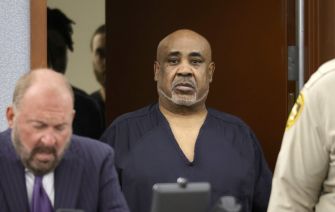
More than three decades after Tupac Shakur was gunned down in one of hip-hop's most notorious unsolved crimes, the man accused of orchestrating the killing is finally set to face a jury.
Duane "Keffe D" Davis will see his long-delayed murder trial begin Monday morning with jury selection in a Las Vegas courtroom, capping years of legal maneuvering since his arrest in September 2023 on first-degree murder charges tied to the rapper's 1996 death. Once jurors are seated, the trial is expected to stretch on for at least a month, and a conviction could send the 63-year-old Davis to prison for life without the possibility of parole.
Despite years of public statements in which he appeared to place himself at the scene of the crime, Davis has since reversed course and now insists he had nothing to do with the shooting.
In a television interview last week, he flatly denied even being in the state at the time, telling a local news outlet he wasn't in Nevada, period. That claim stands in stark contrast to admissions he made in earlier interviews and in his own 2019 memoir, where he acknowledged riding in the car during the attack and obtaining the .40-caliber handgun investigators believe was used in the shooting.
The case traces back to the night of September 7, 1996, when Shakur was riding as a passenger in a car driven by Death Row Records founder Suge Knight following a Mike Tyson fight in Las Vegas. As the pair sat stopped at a red light, a white Cadillac pulled up alongside them, and a gunman firing from the backseat struck Shakur four times. The rapper died six days later.
His killing occurred against the backdrop of the era's bitter East Coast-West Coast hip-hop rivalry and was followed just months afterward by the murder of Shakur's onetime friend turned rival, the Notorious B.I.G. The back-to-back deaths of two of the genre's most prominent young stars became a defining, tragic chapter in American music history, a loss that continues to resonate with fans and journalists who've spent years trying to untangle what really happened.
Davis was a known figure in 1990s Los Angeles gang circles, having led a faction of the Crips before later going public with his version of events. His memoir detailed a broader conflict between Bloods and Crips that had become intertwined with the music industry feud, one that boiled over earlier on the same night Shakur was killed, when the rapper and others assaulted Davis' nephew at a Las Vegas hotel. While Davis never named who fired the fatal shots from the backseat of the Cadillac, he described the confrontation as having crossed a line that couldn't go unanswered.
Prosecutors will lean heavily on those past statements during the trial, having successfully fought to introduce both the memoir and a 2008 police interview in which Davis discussed the shooting, over objections from his defense team that his book was written largely for entertainment and profit rather than as a factual confession.
Jurors are also expected to hear from a lengthy witness list that includes Knight, several of Shakur's family members, a former Death Row security chief Davis has publicly implicated, his memoir's co-author, an early Bad Boy Records executive, and a woman who was dating Davis' nephew at the time of the killing.
Throughout the proceedings leading up to trial, Davis has continued to proclaim his innocence, previously telling interviewers that authorities lack physical evidence, a weapon, or the getaway car to tie him to the crime.