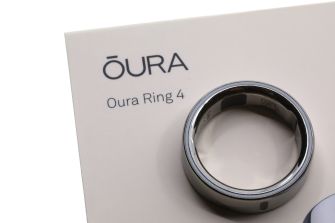
Oura is facing a proposed class action accusing the smart ring maker of misleading consumers about the sleep tracking accuracy of its Oura Rings and how closely their sleep stage estimates compare with clinical testing.
California resident Madison Surber filed the lawsuit Aug. 20 in the U.S. District Court for the Northern District of California, claiming Oura promoted its rings with accuracy figures that overstated what the devices can measure. Surber says she bought an Oura Ring 4 Gold for about $514 in May 2025 after relying on the company's marketing and would not have paid the same price had she known what she describes as the limits of its sleep tracking technology.
At issue are Oura claims of 79% agreement with polysomnography and, more recently, 95% sleep staging accuracy compared with a clinical sleep lab, according to the complaint. Surber argues consumers could understand those figures to mean the ring identifies individual sleep stages with a level of precision comparable to clinical testing.
Oura disputes that interpretation, saying the 95% figure refers to distinguishing sleep from wakefulness rather than identifying each of the four sleep stages. The company cites peer-reviewed studies that found roughly 76% to 79% agreement with clinical testing for four-stage sleep classification, with higher rates for determining whether a person is asleep or awake. Oura also says its ring is a consumer wearable and not a substitute for a clinical sleep study, and has said it plans to defend against the allegations.
Polysomnography, an overnight clinical sleep study, records signals including brain waves, eye movement and muscle activity while a person sleeps. Oura Rings do not directly collect those measurements. Instead, the devices use heart rate, movement, temperature and other signals to estimate whether a user is awake or in light, deep or REM sleep. Surber claims Oura's advertising made those estimates appear more precise than they are.
Surber brings claims under California's Unfair Competition Law, False Advertising Law and Consumers Legal Remedies Act, along with fraud, unjust enrichment and warranty claims.
California consumer protection laws generally allow consumers to challenge advertising that is false or misleading. Courts evaluating those claims generally look at the overall impression an advertisement would leave with a reasonable consumer, rather than asking only whether each individual statement is literally true.
The lawsuit also alleges breach of express warranty. Under California law, a specific factual statement or promise about a product can create an express warranty when it becomes part of what the buyer was promised, even if the company never uses words such as "warranty" or "guarantee."
Surber argues Oura's numerical accuracy representations became part of those promises when consumers bought the rings. Specific, measurable product claims can support a warranty claim in ways that broad promotional language may not.
Surber is seeking to represent a nationwide class of Oura Ring purchasers, along with a separate California subclass. The complaint identifies the Oura Ring 5, Oura Ring 4 and Oura Ring 4 Ceramic among the products at issue and seeks damages, restitution and an order addressing the challenged advertising.
The case remains pending in the U.S. District Court for the Northern District of California. The court has not certified a class or ruled on the merits of Surber's claims.