We use cookies and similar technologies to help our website function, understand how visitors use our site, and improve your experience. Some cookies are necessary for the website to operate, while others may be used for analytics or advertising.
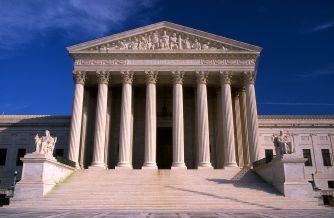
Photo Source: Jeff Kubina, Public domain, via Wikimedia Commons
The U.S. Supreme Court considered further restricting the ability to sue federal agents for constitutional violations on Monday, November 9, 2026, as several justices questioned whether courts should continue allowing individuals to seek financial compensation directly from federal officials.
The arguments arose from a lawsuit filed by former federal prisoner Kekai Watanabe, who alleges that a prison nurse denied him adequate medical treatment for a fractured tailbone. The case could determine whether prisoners can pursue similar claims and whether a longstanding legal precedent allowing certain constitutional lawsuits against federal officers should survive.
Nurse Francis Nielsen is asking the Court to overturn Bivens v. Six Unknown Named Agents, a 1971 decision that allowed individuals to seek damages from federal officers accused of violating their constitutional rights. Nielsen's attorney, Lucas Walker, argued that Congress should decide when federal employees can face such lawsuits.
"The power to create damages remedies belongs to Congress, not federal courts," Walker told the justices.
Justice Brett Kavanaugh questioned whether overturning Bivens would disrupt the legal framework Congress has relied on for decades. He pointed out that lawmakers had left the ruling in place for 55 years, along with a related 1980 decision allowing damages claims over inadequate medical care in federal prisons.
Justice Sonia Sotomayor challenged the argument that other procedures could replace lawsuits against individual officers, questioning whether those alternatives would deter unconstitutional conduct.
Watanabe's lawsuit stems from a July 2021 assault at the Federal Detention Center in Honolulu, where he was beaten during a gang fight. He alleges that Nielsen dismissed his complaints of severe back pain and refused his request for hospital treatment.
Over the following months, Watanabe repeatedly sought medical attention but received only over-the-counter pain medication, according to court records. An examination seven months after the assault revealed that he had suffered a fractured tailbone.
Watanabe sued Nielsen, alleging that the failure to provide adequate treatment violated the Eighth Amendment's prohibition against Eighth Amendment and Cruel and Unusual PunishmentThe Eighth Amendment to the U.S. Constitution prohibits excessive bail, excessive fines, and cruel and unusual punishments. Its Cruel and Unusual Punishments Clause limits the types and severity of punishment the government may impose, including conditions of confinement and methods of execution.Read more →.
A federal judge dismissed his claim, but the U.S. Court of Appeals for the Ninth Circuit reinstated it under Carlson v. Green, a 1980 Supreme Court ruling that allowed a lawsuit against federal prison officials accused of failing to treat an inmate's fatal asthma attack.
Nielsen argues that Watanabe's nonfatal injury and his access to other procedures for seeking relief distinguish his claim from Carlson. His attorneys contend that the justices can dismiss the lawsuit under existing precedent or overturn Bivens entirely.
The Justice Department supported Nielsen but urged the Court to take a narrower approach by overturning Carlsonwhile preserving Bivens.
Watanabe's attorney, Joshua Wesneski, argued that the earlier ruling already covers claims involving prison officials who disregard serious medical needs. He maintained that allowing officers to face personal financial liability helps deter constitutional violations.
The Supreme Court has narrowed the reach of Bivens over several decades, generally refusing to recognize damages claims beyond the limited categories established in its earlier decisions.
Federal law separately allows individuals to sue state and local officers for constitutional violations under Section 1983. People seeking damages directly from federal officers face narrower legal options, a distinction that also affects claims involving federal immigration and law enforcement agents.
A ruling further restricting Bivens could limit those claims, while overturning the precedent entirely could eliminate a longstanding route for seeking damages from federal officials. Other legal remedies would remain available in some circumstances.
The Supreme Court is expected to rule by summer 2027.
Share This Article
If you found this article insightful, consider sharing it with your network.
Lawrence is an attorney and CEO of Law Commentary. His legal background includes corporate and general business law, litigation, transactional matters, and law practice management. His litigation experience has included complex matters involving antitrust, insurance bad faith, and medical malpractice. On the transactional side, Lawrence has worked with buy-sell agreements, Regulation D disclosures, stock option plans, and business matters. Lawrence draws on his legal and business experience to help make court decisions, litigation, legislation, public policy, and other legal developments more accessible to the general public and to give readers clear context for understanding the law and how it affects businesses, consumers, and communities.
The family of Renee Good has filed two federal lawsuits over her fatal shooting by an Immigration and Customs Enforcement agent in Minneapolis, including a civil rights case against ICE agent Jonathan Ross and senior Trump administration officials that invokes provisions of the Reconstruction-era Ku Klux Klan Act.The lawsuits, filed...
Read
More about Renee Good’s Family Sues U.S., ICE Agent and Trump Officials Under Ku Klux Klan-Era Law »
The U.S. Supreme Court ruled Tuesday that Louisiana prison officers cannot be sued personally for money damages under a federal religious liberty law by a Rastafarian man who says they forcibly shaved his head in violation of his faith.In a six-to-three decision, the Court affirmed a ruling by the U.S....
Read
More about Supreme Court Blocks Damages Claim After Rastafarian Man’s Hair Was Shaved in Prison »
The Supreme Court grappled on Thursday with a pivotal legal question raised by the Trump administration concerning the authority of federal judges to issue nationwide injunctions. This judicial power, which temporarily halts government policies across the entire country, is at the center of a high-stakes dispute over former President Donald...
Read
More about Birthright Citizenship at Stake as Supreme Court Considers Injunction Limits »