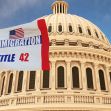
The U.S. Supreme Court agreed Friday, November 13, 2026, to decide whether President Donald Trump can bar migrants from seeking asylum at the southern border under a proclamation declaring an invasion, taking up his administration's appeal of rulings that found the restrictions unlawful.
The case involves a policy Trump issued on January 20, 2025, hours after returning to the White House. Citing an invasion at the U.S.-Mexico border, the president suspended entry for certain migrants and directed immigration officials to deny them access to asylum and other protections while using expedited procedures to remove them from the country.
Under the policy, migrants caught crossing the border illegally can be deported without receiving an initial interview to determine whether they face persecution if returned to their home countries. The restrictions also extend to certain people arriving at official border crossings who lack required medical or criminal history information.
Federal immigration law generally allows people who arrive in the United States or are already present to apply for asylum, regardless of how they entered. The law requires immigration authorities to evaluate claims from people seeking protection based on persecution or a well-founded fear of persecution tied to their race, religion, nationality, political opinion or membership in a particular social group.
The Trump administration argues that the president's authority to suspend entry permits officials to reject asylum applications from migrants covered by the proclamation. Federal officials have credited the restrictions with reducing unlawful border crossings and contend that lengthy asylum proceedings encourage additional migration.
Three immigrant-rights organizations and 13 individuals challenged the policy in February 2025, alleging that federal authorities were denying asylum seekers required screening interviews and exposing them to deportation without an opportunity to establish their eligibility for protection.
U.S. District Judge Randolph Moss ruled against the administration in July, finding that the proclamation exceeded presidential authority by replacing immigration procedures established by Congress. The U.S. Court of Appeals for the District of Columbia Circuit upheld the ruling in April 2026, concluding that the administration had unlawfully restricted access to asylum and created removal procedures outside the federal immigration system.
The appeals court allowed the asylum restrictions to remain in effect during further review, although protections against deportation to countries where migrants could face persecution or torture remain subject to separate legal requirements.
The Supreme Court agreed to review two questions in Mullin v. Refugee and Immigrant Center for Education and Legal Services. The justices will determine whether the proclamation and its enforcement procedures violate federal immigration law and whether federal judges can grant relief covering an entire class of migrants affected by the restrictions.
The asylum dispute joins other immigration cases on the Court's docket, including a challenge to the administration's policy of deporting migrants to countries other than their own. The justices are scheduled to hear arguments in that separate case on December 9.
The Court is expected to hear arguments in the asylum case in the coming months, with a decision anticipated by the end of June 2027.