We use cookies and similar technologies to help our website function, understand how visitors use our site, and improve your experience. Some cookies are necessary for the website to operate, while others may be used for analytics or advertising.
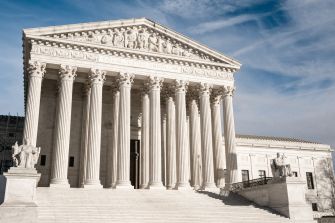
The U.S. Supreme Court on November 16, 2026, rejected the Trump administration's appeal seeking to restore cuts to approximately $59 million in federal research grants awarded to University of California researchers, leaving intact a ruling that found the cancellations likely violated the First Amendment.
The justices denied review in Trump v. Thakur, preserving a preliminary injunctionA preliminary injunction is a temporary court order issued before a case is finally decided that requires a party to take or stop an action while the litigation continues. Federal courts generally consider the likelihood of success, irreparable harm, the balance of equities, and the public interest before granting one.Read more → that protects research grants targeted under President Donald Trump's executive orders restricting diversity, equity and inclusion (DEI) initiatives. The lawsuit will continue in federal court.
The decision leaves standing a May 26 ruling by the U.S. Court of Appeals for the Ninth Circuit, which found that federal officials had singled out researchers whose work expressed viewpoints opposed by the administration. The three-judge panel concluded that the government had likely violated constitutional protections against viewpoint discrimination by canceling existing grants based on their perceived association with DEI.
The dispute began in April 2025, when the National Science Foundation (NSF), National Endowment for the Humanities (NEH) and Environmental Protection Agency (EPA) terminated grants awarded to University of California researchers. Federal officials cited changes in agency priorities under Trump's executive orders, which directed agencies to eliminate DEI-related programs and review government spending.
Six researchers filed a class-action lawsuit in San Francisco, alleging that the cancellations targeted their work because of its perceived support for DEI, environmental justice and related policies. The affected projects included research involving climate policy, water management, medicine and humanities studies.
U.S. District Judge Rita Lin ordered the agencies to reinstate the grants in June 2025, finding sufficient evidence that officials had selected projects for termination based on viewpoints the administration opposed.
The Ninth Circuit upheld the First Amendment protections while narrowing other parts of Lin's injunction involving grants canceled through standardized termination notices. Those claims concerned federal administrative procedures and contractual funding obligations, which the appeals court determined were unlikely to support relief in the district court.
Solicitor General D. John Sauer asked the Supreme Court to overturn the constitutional ruling, arguing that federal agencies have broad authority to direct public spending according to government priorities. The administration maintained that declining to subsidize particular viewpoints differs from restricting private speech.
Attorneys for the researchers, led by UC Berkeley Law Dean Erwin Chemerinsky, argued that the government had canceled existing awards because officials disagreed with the ideas expressed in the funded research. The Ninth Circuit had distinguished the government's authority to choose which programs to support from its use of funding decisions to suppress disfavored viewpoints.
The researchers later reached a settlement in principle involving EPA grants, leaving NSF and NEH funding at the center of the Supreme Court appeal. According to the administration's petition, approximately $59 million remained on those awards when they were terminated, with some scheduled to continue through November 2029.
The Supreme Court's denial preserves the preliminary ruling without deciding the underlying constitutional claims. The dispute will continue before Judge Lin in the Northern District of California, where the researchers are pursuing a final resolution of their challenges to the grant cancellations.
Share This Article
If you found this article insightful, consider sharing it with your network.
Lawrence is an attorney and CEO of Law Commentary. His legal background includes corporate and general business law, litigation, transactional matters, and law practice management. His litigation experience has included complex matters involving antitrust, insurance bad faith, and medical malpractice. On the transactional side, Lawrence has worked with buy-sell agreements, Regulation D disclosures, stock option plans, and business matters. Lawrence draws on his legal and business experience to help make court decisions, litigation, legislation, public policy, and other legal developments more accessible to the general public and to give readers clear context for understanding the law and how it affects businesses, consumers, and communities.
The U.S. Supreme Court agreed Friday, November 13, 2026, to decide whether President Donald Trump can bar migrants from seeking asylum at the southern border under a proclamation declaring an invasion, taking up his administration's appeal of rulings that found the restrictions unlawful.The case involves a policy Trump issued on...
Read
More about Supreme Court to Decide Whether Trump Can Block Asylum at Border »
A federal appeals court ruled Friday that the Trump administration unlawfully withheld $73.5 million in highway funding from New York after the state refused to revoke nearly 33,000 commercial driver's licenses issued to noncitizens.The U.S. Court of Appeals for the Second Circuit ruled on November 13, 2026, that the Department...
Read
More about Appeals Court Blocks Trump's $73 Million Highway Funding Cut to New York »
The U.S. Supreme Court on Monday rejected the Trump administration's last-minute attempt to block California from counting mail ballots associated with more than 20,000 voters suspected of being noncitizens, leaving the state's election procedures intact one day before the November 3, 2026, midterm elections.The justices denied the November 2 emergency...
Read
More about Supreme Court Rejects Trump's Bid to Block 20,000 California Ballots »
The Supreme Court on Tuesday, October 27, 2026, rejected an emergency request to restore immigration judges' authority to temporarily close certain deportation cases, leaving in place a nationwide restriction that prevents judges from using a Biden-era regulation to pause proceedings while immigrants pursue other forms of legal protection.The justices denied...
Read
More about Supreme Court Refuses to Restore Judges' Power to Pause Deportation Cases »
A federal appeals court ruled on October 23, 2026, that President Donald Trump violated the Constitution when he took control of approximately 4,000 California National Guard members during immigration enforcement protests in Los Angeles in 2025, rejecting his administration's claim that the unrest amounted to a rebellion.In a 2-1 decision,...
Read
More about Court Rules Trump's California National Guard Takeover Was Unconstitutional »