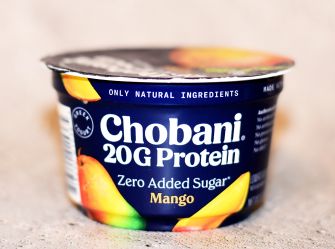
Chobani is facing a federal lawsuit from Danone US over claims that it manipulated serving sizes to overstate the protein content of 32-ounce Chobani 20G Protein Greek Yogurt tubs.
The lawsuit, filed June 15 in the U.S. District Court for the Southern District of New York, alleges Chobani uses an inflated portion size on its multi-serving containers to support the 20-gram claim. Danone argues that if Chobani followed federal labeling rules using the industry-standard 5.3-ounce measure, each portion would contain less than 18 grams of protein.
Oikos Pro, sold by Danone, is a competing yogurt line the company describes as an ultra-high-protein product. The product reaches the 20-gram protein mark in the standard 5.3-ounce amount, Danone claims, while Chobani uses 6.7 ounces to reach the advertised total.
The complaint alleges that the comparison makes Chobani’s yogurt appear similar to Oikos Pro even though the products have different protein densities. Danone argues the label diverts shoppers looking for high-protein yogurt and takes sales from Oikos Pro, which the company says sells at a higher price.
Danone also frames the dispute as a competition issue, not only a labeling issue. Producing yogurt with 20 or more grams of protein in a standard serving is difficult and costly, the company argues, requiring specialized technology, production facilities, and recipes. The filing says Danone made those investments for Oikos Pro, while Chobani used serving-size calculations to compete in the same market segment without producing a yogurt with comparable protein density.
The lawsuit relies on false advertising and unfair competition claims, two legal theories that can overlap when a company says a rival used deceptive marketing to win sales. False advertising claims can apply when a product statement gives shoppers a misleading impression about what they are buying. Unfair competition claims address the business harm that can follow when a rival allegedly gains market share through deceptive or improper conduct.
Court filings say the 20-gram label gives consumers an inaccurate comparison between the two yogurt lines and allows Chobani to compete for high-protein yogurt sales on allegedly misleading terms. Danone argues Chobani gained a market advantage by placing its yogurt in the same category as Oikos Pro, while allegedly offering less protein under the industry-standard serving size.
Federal serving-size rules are central to Danone’s labeling argument. Under FDA labeling requirements, the amount listed on a Nutrition Facts panel is supposed to reflect standardized serving measures for comparable foods. Danone claims Chobani’s 32-ounce tubs must follow the requirements for multi-serving products, not the larger portion used for Chobani’s single-serve cups.
Protein content has become a major comparison point for shoppers choosing everyday foods. The complaint points to Chobani’s December 2024 consumer research, which found broad interest in increasing protein intake while also identifying gaps in nutrition knowledge and barriers tied to cost, convenience, and taste. Danone argues Chobani’s label takes advantage of that gap by presenting the yogurt as a 20-gram protein product on terms the company says are misleading.
The lawsuit asks the court to stop Chobani from using the challenged labeling and advertising. Danone also seeks damages, corrective advertising, and profits allegedly tied to the disputed yogurt sales.
Chobani has not publicly responded to the lawsuit.